How Ibiza Became the Party Capital of the World: Hippies, Pacha, Amnesia, Space and DC-10
Sixty years ago Ibiza had no clubs. The story of the hippies, the airport, Pacha, Amnesia, Ku, Space and DC-10, and the 1987 holiday that changed British music, with our short documentary.

Sixty years ago Ibiza had no clubs at all. It had farmers, fishermen and a few hundred outsiders who had come looking for somewhere nobody would bother them. In 2025 more than nine million passengers passed through its airport, and the island holds four of the most famous dance floors on earth. This is how that happened: the hippies, the airport, Pacha, Amnesia, a club built around a swimming pool, one holiday in 1987 that changed British music, and the morning parties at Space and DC-10.
Watch: the story in seven minutes
We told this story as a short documentary on the Techno Airlines YouTube channel, with archive photography and footage from the island. The article below goes further, with the dates, the names and the places you can still visit.
The 1960s: hippies, a dictator and a post office in a bar
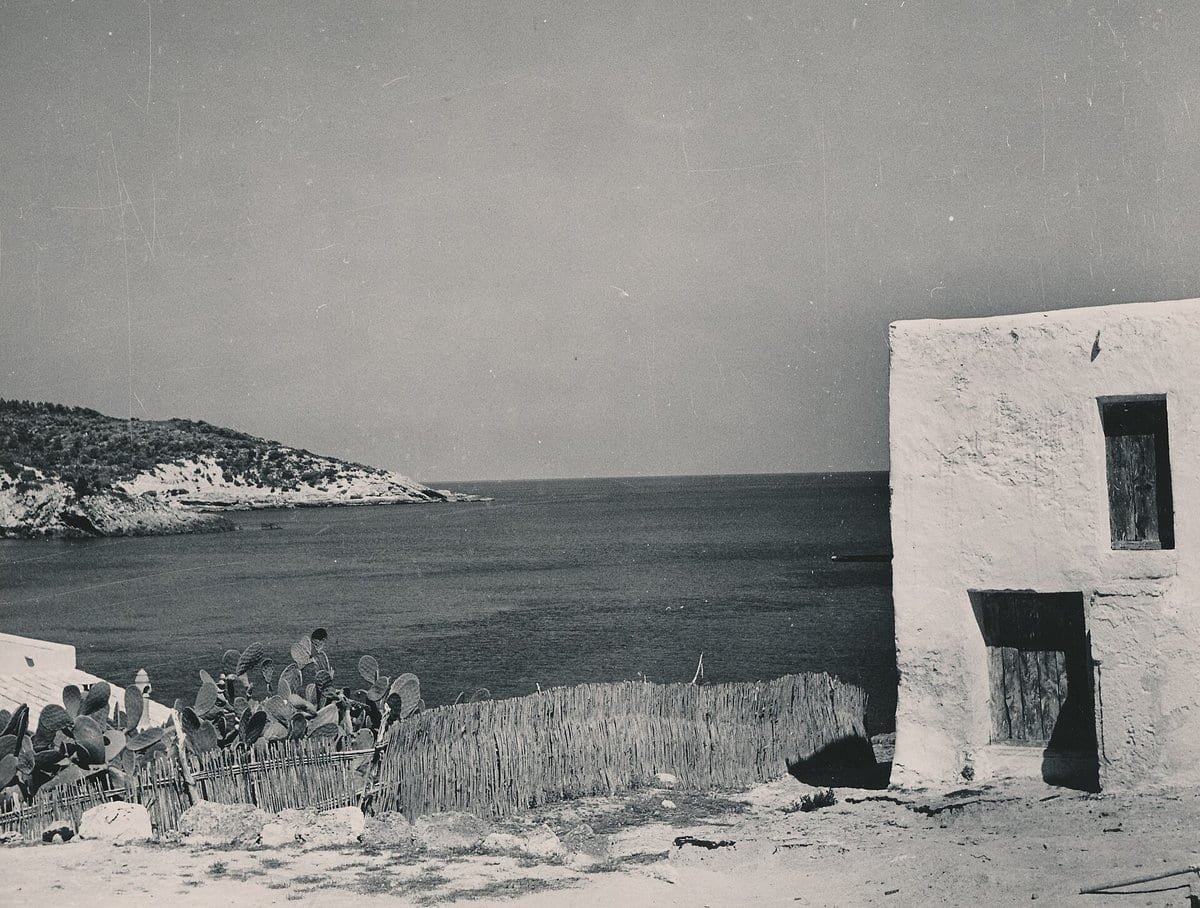
In the 1960s Ibiza was poor, quiet and a long way from anywhere. Spain was ruled by General Franco until his death in 1975, but the regime paid little attention to a small island in the Balearics, and that was the attraction. Artists and bohemians had started to settle there in the late 1950s. Through the 1960s the hippies followed, among them young Americans who did not want to be sent to Vietnam.
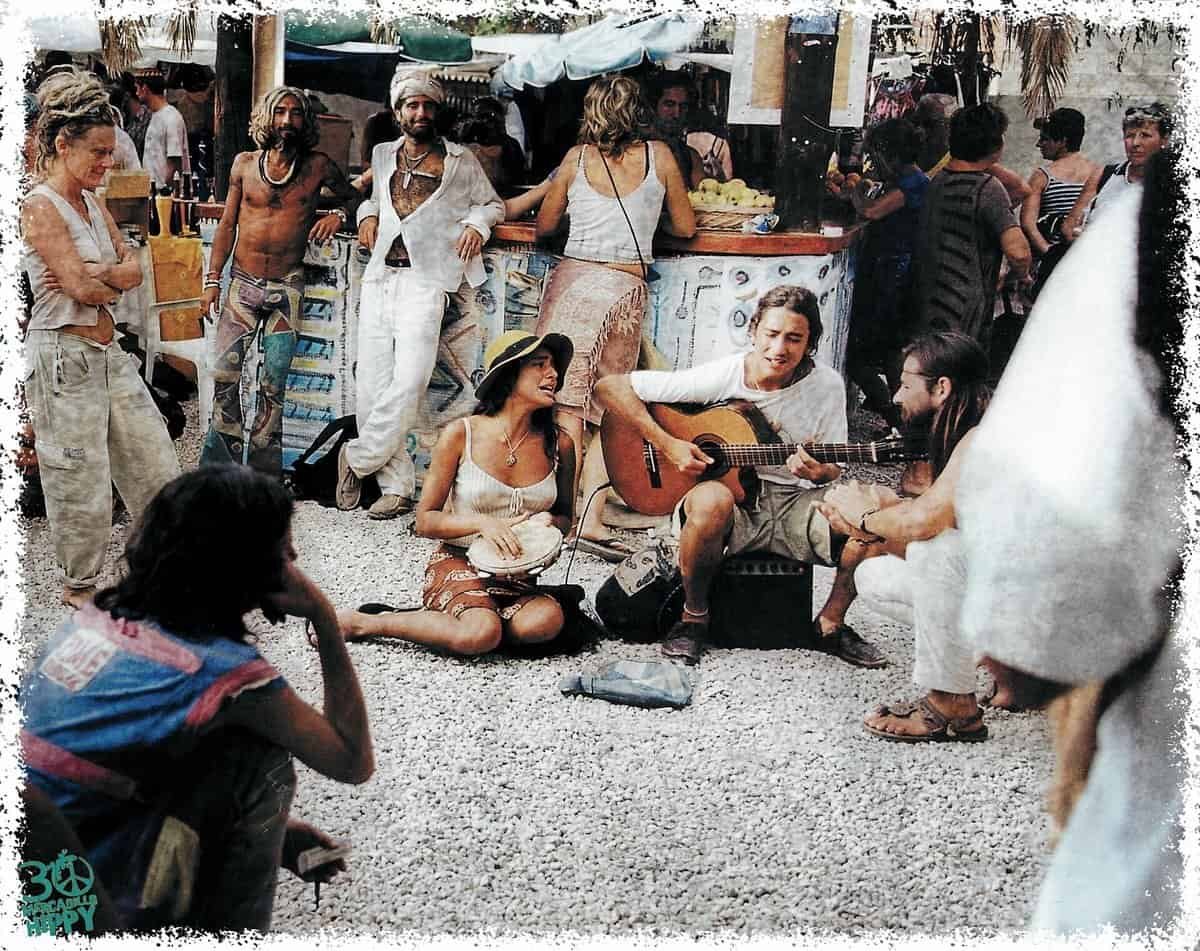
In the village of Sant Carles, in the north, one bar became their post office. Letters and money orders from home arrived at Bar Anita, which had the only telephone in the village, and the wooden mailboxes are still on its wall. The hippy markets that every visitor now walks through came out of the same community: Las Dalias, which had opened as a roadside venue in 1954, started its market in 1985 with five stalls.
The second ingredient was concrete. On 15 July 1966 Ibiza airport opened to international flights. Suddenly the island that had taken days to reach was a few hours from London, Paris or Hamburg. Ibiza had the freedom and now it had the visitors. It only needed a dance floor.
1973: Pacha and the cherries
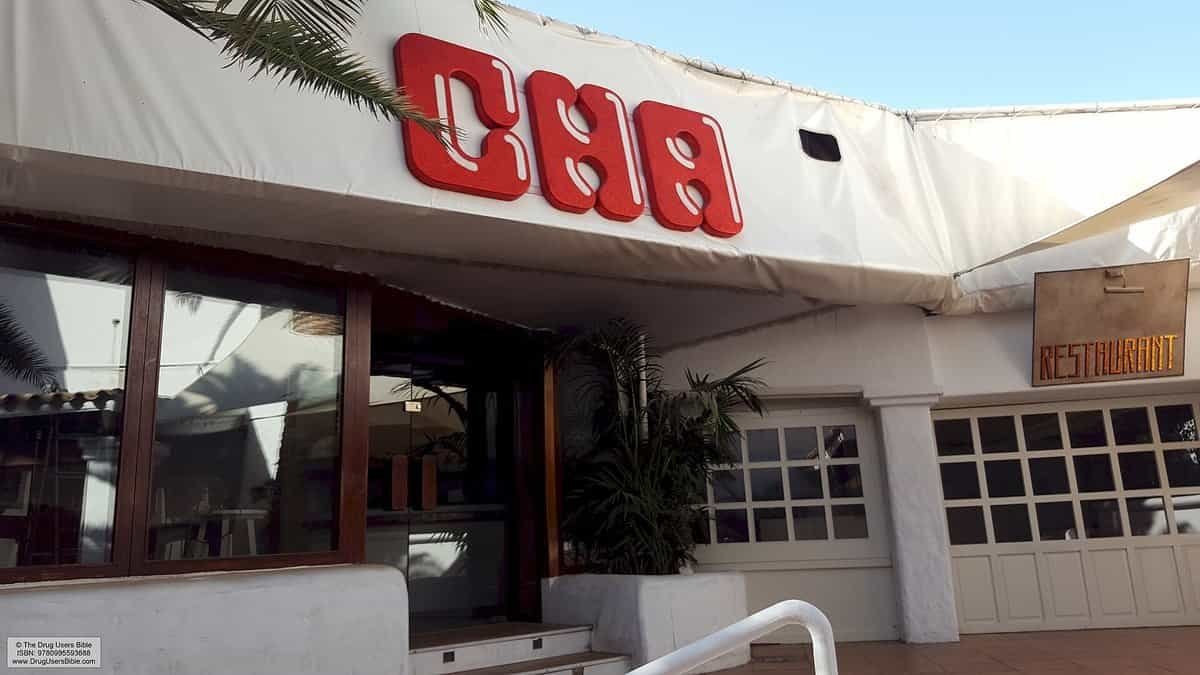
Ricardo Urgell opened the first Pacha in 1967 in Sitges, a beach town near Barcelona. In 1973 he brought it to Ibiza and put it across the harbour from the old town, in a white building in the style of an Ibizan farmhouse. The same year the airport opened a new terminal.
Pacha has never moved. More than fifty years later it is still open in the same place, and its two red cherries have become one of the best known logos in nightlife, on clubs, hotels and T-shirts around the world. In October 2023 the Pacha group was sold to Dubai’s FIVE Holdings for about 302 million euros. It has since become the first major club to run on renewable energy, and Solomun’s Sunday residency is one of the longest running nights on the island.
1976: Amnesia and the Balearic beat
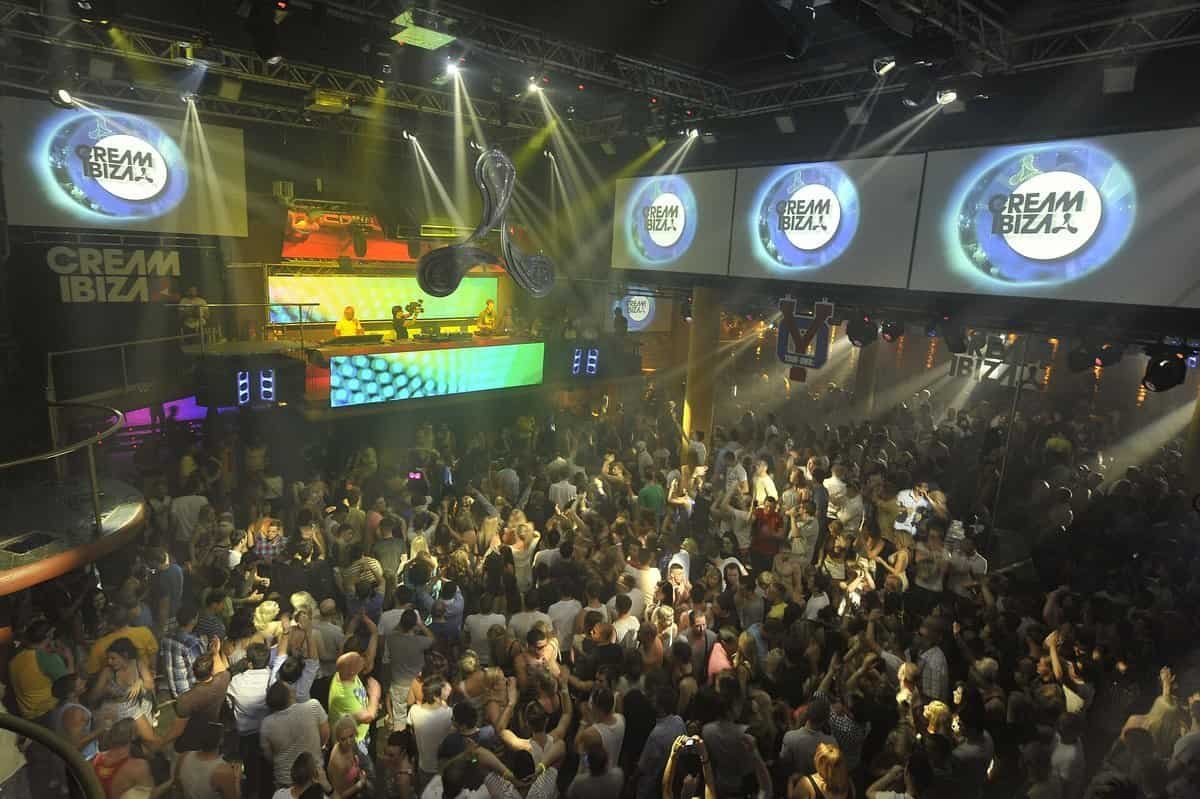
A few kilometres inland, near the village of San Rafael, stood a farmhouse from the 18th century that had been one family’s home for five generations. In May 1976 a philosopher from Madrid, Antonio Escohotado, leased it and opened a venue called El Taller del Olvido: The Workshop of Forgetfulness. It soon got a shorter name with the same meaning. Amnesia.
That same year a 23 year old Argentine called Alfredo Fiorito arrived on the island. By the mid 1980s he was Amnesia’s resident DJ, playing on an open air dance floor that had no roof, to a crowd that danced under the stars until the morning. Alfredo played everything: pop, rock, reggae, flamenco, Italian records and the first house music arriving from America, all in one night. People started to call the mix the Balearic beat.
Alfredo died on 24 December 2024, aged 71. In 2026 Amnesia is 50 years old, still in the same farmhouse, and still home to nights such as Resistance and Metamorfosi.
Ku: the club built around a swimming pool
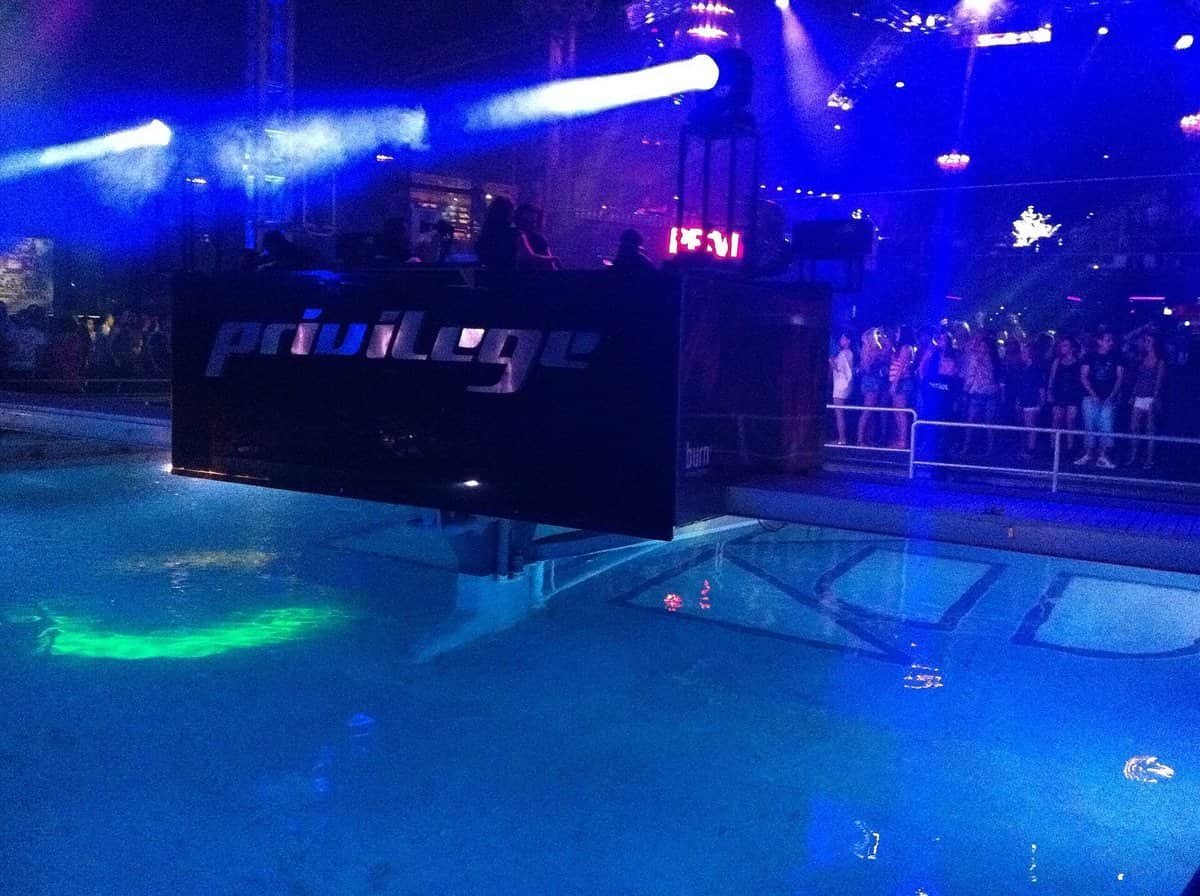
Also in the hills of San Rafael, three friends from the Basque Country took over a restaurant with a swimming pool in the late 1970s and named it after their club in San Sebastián: Ku. It was open to the sky and built around the pool, and through the 1980s it was the most glamorous address on the island. In late May 1987 Freddie Mercury and the opera singer Montserrat Caballé performed the song Barcelona live for the first time, on the stage at Ku.
Around 1990 the authorities made the island’s open air clubs build roofs because of the noise. Ku was covered, and in 1995 it was renamed Privilege. Guinness World Records lists it as the largest nightclub in the world, able to hold up to 10,000 people across 6,500 square metres.
Summer 1987: the holiday that changed British music
In late August 1987 four DJs from London came to Ibiza on holiday: Paul Oakenfold, Danny Rampling, Nicky Holloway and Johnny Walker. Oakenfold was there for his 24th birthday. One night they went to Amnesia and heard Alfredo play under the open sky. By their own accounts they had never seen anything like it.
Back in London they tried to rebuild that night. Rampling started Shoom in a gym in Southwark in late 1987. In 1988 Oakenfold launched Spectrum at Heaven and Holloway started The Trip at the Astoria. That summer acid house swept Britain and the press called it the Second Summer of Love. Every summer after that, British clubbers flew to Ibiza to find the place where it had started, and the island’s clubs suddenly had a much bigger audience.
Sunset: Café del Mar
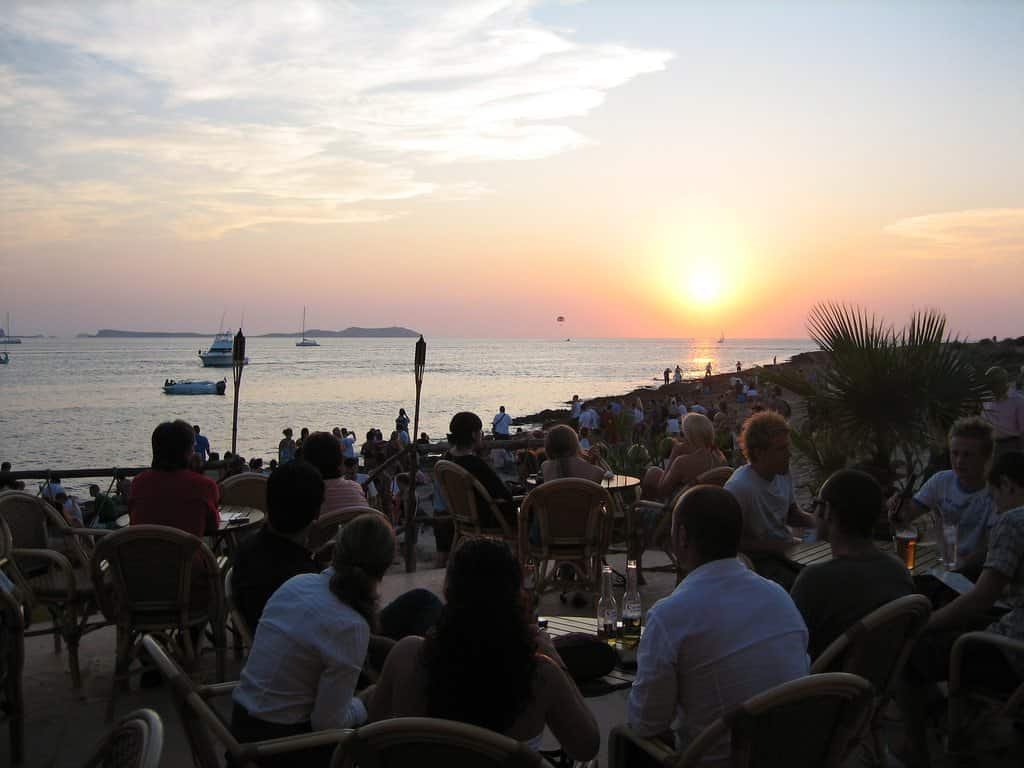
Not every Ibiza story happens at night. In 1980 a small bar called Café del Mar opened on the rocky west coast of Sant Antoni, facing the sunset. From 1991 its resident DJ was José Padilla, who had lived on the island since 1975 and played slow, soft records as the sun went down. The first Café del Mar compilation came out in 1994, and chill out music travelled around the world with the bar’s name on the cover. Padilla died in October 2020. The sunset crowd still gathers on the same rocks every evening.
Space: the club that opened in the morning
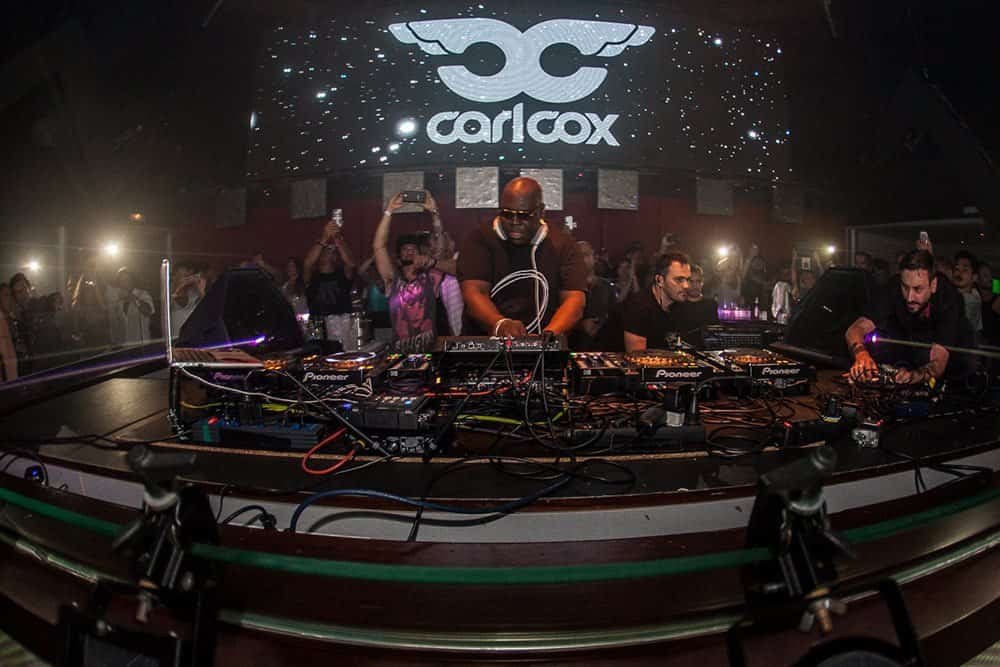
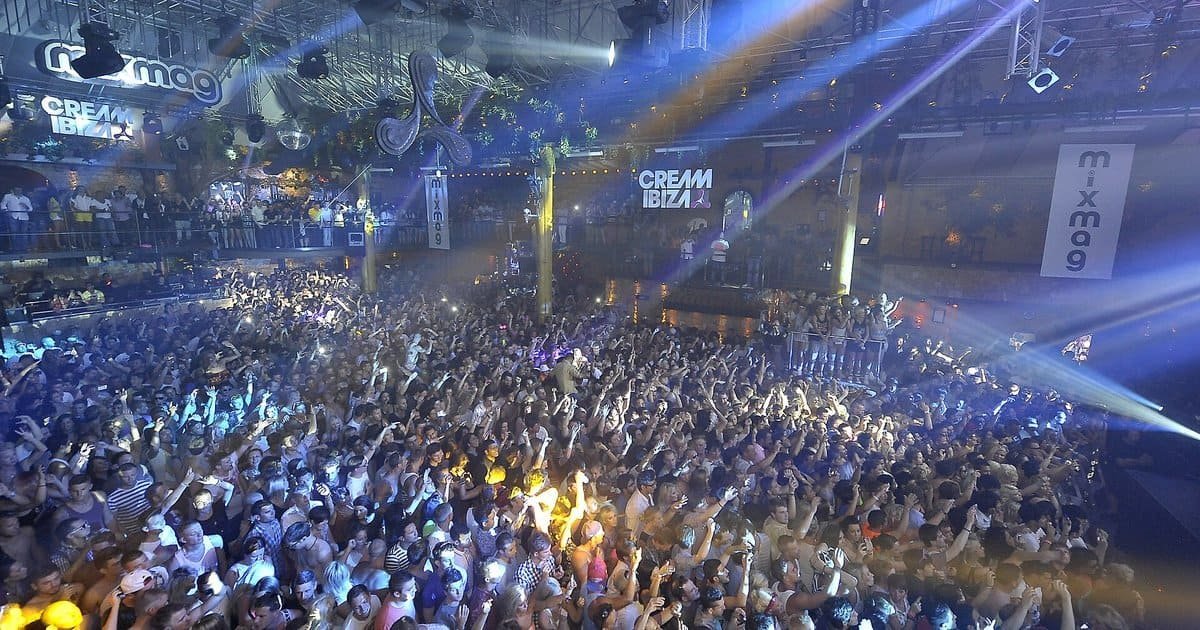
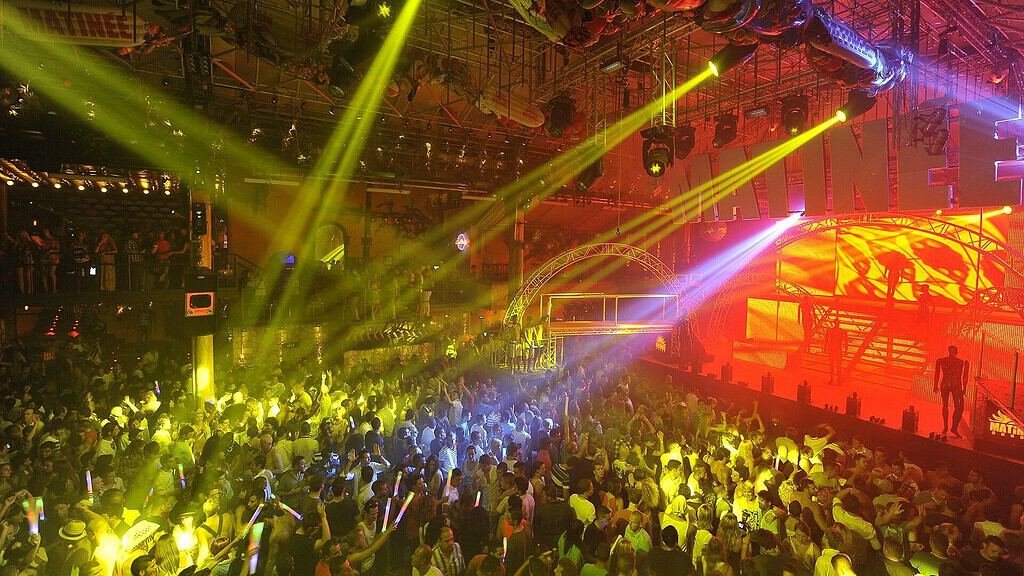
For most of this period the law said a club only had to close for two hours in every 24. In 1989 Pepe Roselló took over a venue in Playa d’en Bossa, close to the airport, and built a club around that gap. When the others closed in the morning, Space opened. People danced outside on the terrace in the sunshine, the planes on their way in to land passed low overhead, and every time one did the whole crowd cheered.
Carl Cox played there for 15 seasons, and his Tuesday night Music is Revolution became the club’s signature. He ended it on 20 September 2016 with a vinyl set that lasted around nine hours. On 2 October 2016 Space held its last party: it started at four in the afternoon and finished around midday the next day, with an estimated 15,000 to 20,000 people coming to say goodbye.
The following summer the building reopened as Hï Ibiza, which went on to be voted DJ Mag’s No.1 club in the world four years in a row, from 2022 to 2025.
DC-10: the end of the runway
At the very end of the airport runway, on the road to the Salinas salt flats, there was a small roadside bar. In the 1990s it became a club, named after the DC-10 jet. The often repeated story that it was an aircraft hangar does not hold up, but the planes are real, and they come in low over the garden.
In July 1999 two Italian promoters, Antonio Carbonaro and Andrea Pelino, started a party there on Monday mornings for the people who did not want to go home when Space finished its Sunday session. They called it Circoloco. It is still the Monday party at DC-10 a quarter of a century later.
The era that created it ended in 2008. On 17 July that year the municipality of Sant Josep, which covers both Space and DC-10, ruled that clubs could not open before 16:30 and had to close at 06:00. The morning parties were over. The same year the council fined DC-10 300,000 euros and ordered it closed for a year, shutting the doors on the morning of Circoloco’s closing party. It stayed shut for the whole of 2009 and came back in 2010.
Ibiza today: bigger, louder and much more expensive
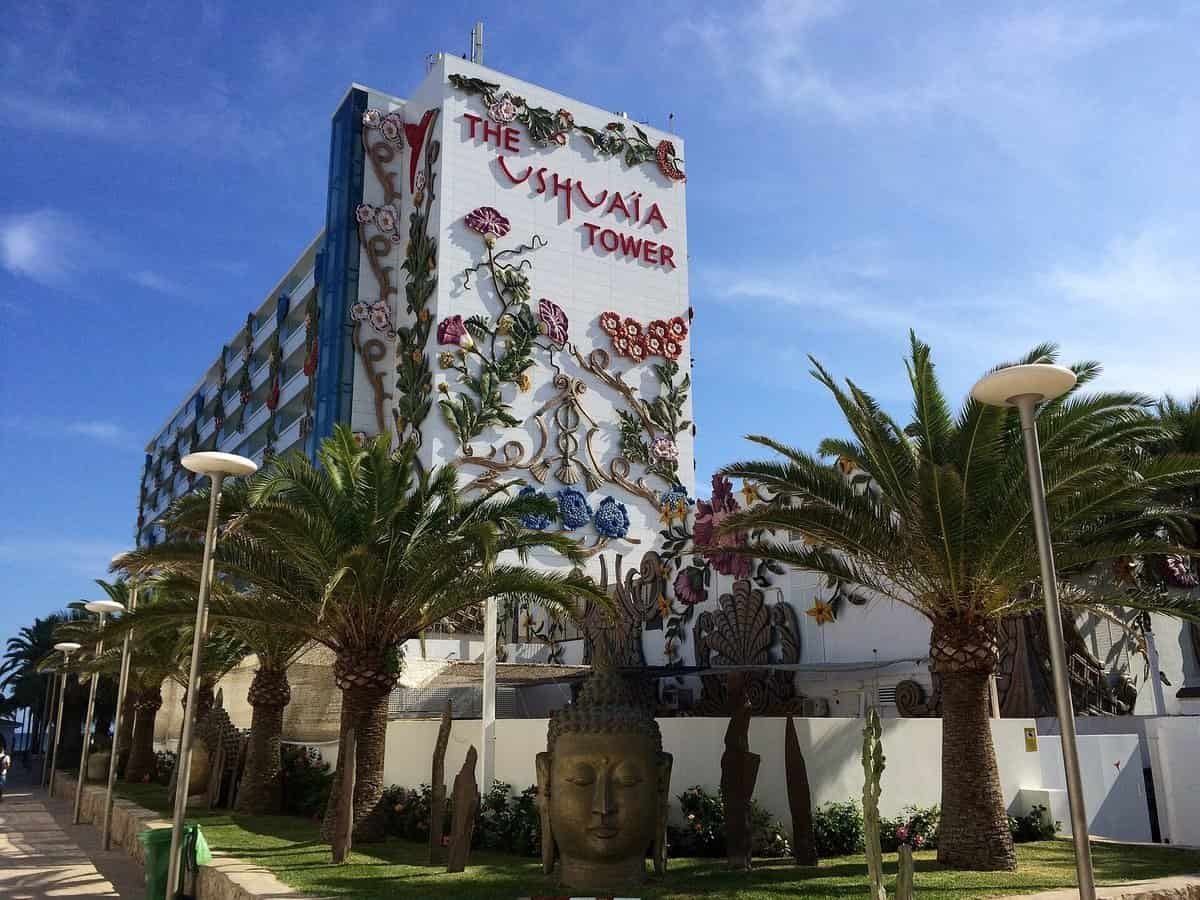
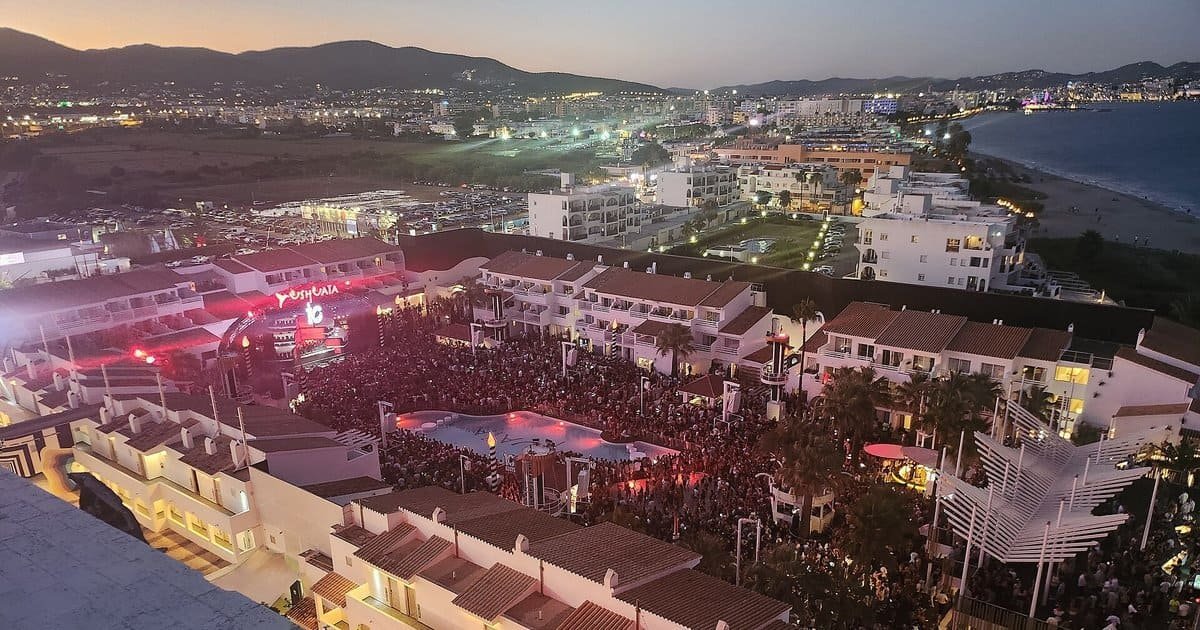
In 2011 Ushuaïa opened in Playa d’en Bossa: a hotel with a festival sized stage next to the pool. It moved the main event to the afternoon and early evening, in the open air, which is exactly what the 2008 rules allowed. The team behind it later opened Hï Ibiza across the road.
Then the oldest giant came back. Privilege had not opened since the 2019 season. On 30 May 2025 the building reopened as [UNVRS], with Carl Cox and Jamie Jones playing back to back on the opening night. Within a year it was voted No.1 in DJ Mag’s Top 100 Clubs, the first club to top the poll in its debut year.
The numbers are hard to picture. Ibiza airport handled 9,138,224 passengers in 2025, a record, on an island with about 163,000 residents. Prices have followed the demand: we tracked them in how Ibiza clubbing costs doubled between 2015 and 2025.
The clubs from this story you can still visit
 Pacha: since 1973
 Pacha: since 1973
The oldest of the big rooms, in the same white building across the harbour from Ibiza Town.
Amnesia: since 1976
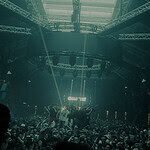 Amnesia: since 1976
The farmhouse where the Balearic beat started. Two rooms now, the Main Room and the Terrace, both with roofs.
[UNVRS]: the old Ku
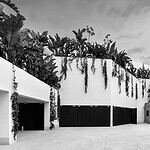 [UNVRS]: the old Ku
The building that was Ku and then Privilege, reopened in 2025. The Carl Cox Sunday residency links it straight back to the Space years.
Hï Ibiza: where Space stood
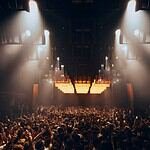 Hï Ibiza: where Space stood
The former Space building in Playa d’en Bossa, rebuilt inside and open since 2017.
DC-10: Mondays by the runway
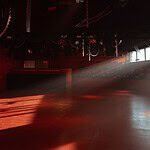 DC-10: Mondays by the runway
Still the rawest of the big clubs, and still home to Circoloco.
Ibiza clubbing timeline
| When | What happened |
|---|---|
| Late 1950s | Artists, bohemians and the first hippies start to settle on the island |
| 15 July 1966 | Ibiza airport opens to international flights |
| 1973 | Pacha Ibiza opens across the harbour from Ibiza Town; the airport gets a new terminal |
| May 1976 | A farmhouse in San Rafael becomes The Workshop of Forgetfulness, soon renamed Amnesia |
| Late 1970s | Ku opens around a swimming pool in the hills of San Rafael |
| 1980 | Café del Mar opens on the sunset coast of Sant Antoni |
| Mid 1980s | DJ Alfredo becomes resident at Amnesia and the Balearic beat is born |
| Late May 1987 | Freddie Mercury and Montserrat Caballé sing Barcelona live for the first time, at Ku |
| August 1987 | Four London DJs hear Alfredo at Amnesia and take the idea home |
| 1989 | Pepe Roselló takes over Space in Playa d’en Bossa |
| Around 1990 | Open air clubs are made to build roofs because of noise |
| 1995 | Ku is renamed Privilege |
| July 1999 | Circoloco starts on Monday mornings at DC-10 |
| July 2008 | Sant Josep bans morning opening; DC-10 is fined 300,000 euros and closed for a year |
| 2011 | Ushuaïa Ibiza Beach Hotel opens and moves the party to daylight |
| 2 October 2016 | Space holds its last party |
| 28 May 2017 | Hï Ibiza opens in the former Space building |
| 30 May 2025 | The old Ku and Privilege building reopens as [UNVRS] |
| 2026 | [UNVRS] is voted No.1 in DJ Mag’s Top 100 Clubs; Amnesia turns 50 |
Ibiza club history FAQ
Why is Ibiza famous for partying?
Because three things met on one small island: a hippie community that arrived from the late 1950s, an international airport that opened in 1966, and a run of clubs that opened in the 1970s, starting with Pacha in 1973 and Amnesia in 1976. In the 1980s DJ Alfredo’s open air sets at Amnesia gave the island its own sound, and British DJs carried it home in 1987.
What was the first big club in Ibiza?
Pacha. Ricardo Urgell opened the first Pacha in Sitges, near Barcelona, in 1967 and brought it to Ibiza in 1973. It is still open in the same place, across the harbour from Ibiza Town.
What is the Balearic beat?
It is the name given to the mix DJ Alfredo played at Amnesia in the mid 1980s: pop, rock, reggae, flamenco, Italian records and early house in the same night. It describes a way of playing more than a single genre.
What happened to Space Ibiza?
Space closed after a final party that began on 2 October 2016 and ran into the next day. Its building in Playa d’en Bossa reopened on 28 May 2017 as Hï Ibiza, which was voted DJ Mag’s No.1 club in the world from 2022 to 2025.
Is Privilege Ibiza still open?
Not under that name. Privilege, which began as Ku in the late 1970s, has not opened since the 2019 season. The building reopened on 30 May 2025 as [UNVRS], and in 2026 it topped DJ Mag’s Top 100 Clubs poll.
Why do Ibiza clubs close at 6 am?
Until 2008 a club only had to close for two hours in every 24, which made morning parties legal. In July 2008 the municipality of Sant Josep, home to Space and DC-10, banned clubs from opening before 16:30 and set closing at 06:00. Today clubs across the island close at around six in the morning.
Is DC-10 really an old aircraft hangar?
That is the popular story, but better sources describe a farmhouse and roadside bar at the end of the airport runway that became a club in the 1990s. The name comes from the DC-10 jet, and the planes are real: they pass low over the venue.
The TA view
Every chapter of this story begins with somebody finding a gap. The hippies found an island the regime ignored. Alfredo found a dance floor with no roof and no rules about what a DJ should play. Space found two hours in the law, and DC-10 found the hours after that. Each time the gap closed, with a roof order or a timetable or a fine, the party moved somewhere else and got bigger. Today Ibiza is the most professional clubbing destination in the world, and also the most expensive. The freedom that built it is harder to find, but it is still there on a Monday at the end of the runway, or on the rocks in Sant Antoni when the sun goes down. Our advice is the same as ever: go, but go knowing the story.
Keep exploring: the best Ibiza parties · Ibiza residencies night by night · Ibiza closing parties guide · 7 legendary Ibiza parties · how Berlin techno started in a bank vault · Ibiza events · techno clubs in Spain