The 21 Most Influential EDM Record Labels (2026 Guide)
The 21 most influential EDM record labels in 2026, from Spinnin' Records and Armada Music to Monstercat, OWSLA and Ed Banger: who founded them, who owns them and what they released.

Updated: November 2026
The most influential EDM record labels are Spinnin’ Records, Ultra Records, Ministry of Sound, Astralwerks, Big Beat Records, Armada Music, Revealed Recordings, Protocol Recordings, Musical Freedom, STMPD RCRDS, Black Hole Recordings, Smash the House, Anjunabeats, Axtone Records, Defected Records, mau5trap, Monstercat, Mad Decent, OWSLA, Dim Mak Records and Ed Banger Records. Between them these 21 labels released “Animals”, “Lean On”, “Harlem Shake”, “Happier” and “Scary Monsters and Nice Sprites”, and five of them now belong to Warner Music, Sony Music or Universal Music. If you searched for the best electro music labels, this is the same list: outside the UK and the US, “electro” is simply the everyday word for electronic dance music.
This Techno Airlines guide explains who founded each label, when, who owns it in 2026 and which record made its name. The labels are grouped by ownership and sound, and the order inside each group is editorial, not a sales chart. Looking for a darker sound? Read our guides to the most influential techno record labels and the most influential tech house record labels.
What are the biggest EDM record labels in 2026?
The 21 biggest EDM record labels were founded between 1987 and 2016, and most of them were started or co-founded by a working DJ or producer. The table below puts founder, owner, genre and biggest hit side by side.
| Label | Founded | Founder | Owner or parent | Genre | Biggest hit |
|---|---|---|---|---|---|
| Spinnin’ Records | 1999 | Eelko van Kooten, Roger de Graaf | Warner Music Group (since 2017) | Big room, house | Martin Garrix, “Animals” (2013) |
| Ultra Records | 1995 | Patrick Moxey | Sony Music (since 2021) | US crossover dance | Kygo, “Firestone” (2014) |
| Ministry of Sound | 1991 (club) | Justin Berkmann, James Palumbo | Sony Music (label, since 2016) | Compilations, UK club anthems | Eric Prydz, “Call on Me” (2004) |
| Astralwerks | 1993 | Brian Long | Universal Music Group | Electronica, dance-pop | Marshmello and Bastille, “Happier” (2018) |
| Big Beat Records | 1987 | Craig Kallman | Warner Music Group (via Atlantic) | House, dubstep, dance-pop | Galantis, “Runaway (U & I)” (2014) |
| Armada Music | 2003 | Armin van Buuren, Maykel Piron, David Lewis | Independent | Trance | Armin van Buuren, “This Is What It Feels Like” (2013) |
| Revealed Recordings | 2010 | Hardwell | Independent | Big room, electro house | Hardwell, “Spaceman” (2012) |
| Protocol Recordings | 2012 | Nicky Romero | Independent | Progressive house | Nicky Romero and Krewella, “Legacy” (2013) |
| Musical Freedom | 2009 | Tiësto | Artist label | Main stage house | Tiësto, “The Business” (2020) |
| STMPD RCRDS | 2016 | Martin Garrix | Artist label | Progressive house, future bass | Martin Garrix and Bebe Rexha, “In the Name of Love” (2016) |
| Black Hole Recordings | 1997 | Tiësto, Arny Bink | Independent | Trance | Tiësto, “Traffic” (2003) |
| Smash the House | 2010 | Dimitri Vegas & Like Mike | Artist label | Big room | Dimitri Vegas & Like Mike vs Ummet Ozcan, “The Hum” (2015) |
| Anjunabeats | 2000 | Jono Grant, Paavo Siljamäki | Independent | Trance, progressive | Above & Beyond, “Sun & Moon” (2011) |
| Axtone Records | 2005 | Axwell | Pophouse Entertainment (since 2025) | Progressive house | Ivan Gough and Feenixpawl, “In My Mind” (Axwell Mix, 2012) |
| Defected Records | 1999 | Simon Dunmore | Private owners (sold in 2022) | House | Roger Sanchez, “Another Chance” (2001) |
| mau5trap | 2007 | deadmau5 | Catalogue with Create Music Group (since 2025) | Progressive house, techno | deadmau5, “Ghosts ‘n’ Stuff” (2008) |
| Monstercat | 2011 | Mike Darlington, Ari Paunonen | Independent | Bass music, gaming soundtracks | Marshmello, “Alone” (2016) |
| Mad Decent | 2006 | Diplo | Independent | Moombahton, trap, global club | Major Lazer and DJ Snake, “Lean On” (2015) |
| OWSLA | 2011 | Skrillex, Tim Smith, Kathryn Frazier, Clayton Blaha | Skrillex and partners; largely inactive since 2020 | Dubstep, bass house | Jack Ü with Justin Bieber, “Where Are Ü Now” (2015) |
| Dim Mak Records | 1996 | Steve Aoki | Independent | Punk, indie, electro | The Bloody Beetroots feat. Steve Aoki, “Warp 1.9” |
| Ed Banger Records | 2003 | Pedro Winter | Independent | French electro, house | Justice, “D.A.N.C.E.” (2007) |
Which EDM labels are owned by major record companies?
Five of the 21 labels on this list are owned by a major: Spinnin’ Records and Big Beat Records belong to Warner Music Group, Ultra Records and the Ministry of Sound label belong to Sony Music, and Astralwerks belongs to Universal Music Group. All five keep their own name, roster and release schedule.
Spinnin’ Records

Spinnin’ Records is a Dutch label founded in 1999 by Eelko van Kooten and Roger de Graaf. It started by pressing vinyl and grew into a network of around 25 sub-labels, most of them tied to a single artist. In September 2017 Warner Music Group bought the company for a reported sum of more than 100 million dollars, and in October 2023 the label moved its headquarters from Hilversum to Amsterdam.
Its best known release is Martin Garrix‘s “Animals” from 2013, which reached number one in the United Kingdom. Garrix left Spinnin’ in 2015 after a dispute over the rights to his music and now runs his own label, STMPD RCRDS, which is why the official video sits on the STMPD RCRDS channel today.
Listen: Dance Top Hits, curated by Spinnin’ Records.
Ultra Records

Ultra Records was established in New York City in 1995 by Patrick Moxey, a former PolyGram and Virgin executive. Its catalogue includes American releases by Calvin Harris, deadmau5, David Guetta and Steve Aoki, and the label won Grammys for Benny Benassi’s remix of Public Enemy’s “Bring the Noise” in 2008 and Skrillex’s remix of Benassi’s “Cinema” in 2012.
Ultra entered a global partnership with Sony Music in 2013, and Sony bought the label outright in December 2021. It is not connected to Ultra Music Festival: the two companies went to court over the name and settled in 2012.
Its biggest streaming-era hit is Kygo‘s “Firestone”, released on 1 December 2014, which reached number one in Norway and made tropical house a radio sound.
Listen: Vacation Vibes, curated by Ultra Records.
Ministry of Sound

Ministry of Sound began as a nightclub. Justin Berkmann’s idea, backed by James Palumbo, opened on 21 September 1991 in a disused bus garage in Elephant and Castle, London, and the club still runs at the same address. The record label that followed turned club nights into compilation albums such as The Annual. Its Data imprint released Eric Prydz‘s “Call on Me” in the United Kingdom, a number one single in September 2004.
In August 2016 the recorded music business was acquired by Sony Music. The club, events and the rest of the group stayed with the original company, so the name now covers two separate businesses.
Listen: Dance Nation, curated by Ministry of Sound.
Astralwerks
Astralwerks was founded in New York City in July 1993 by Brian Long as the electronic imprint of Caroline Records. In its first years it was the American home of British acts such as The Chemical Brothers and Fatboy Slim: The Chemical Brothers’ 1995 debut album “Exit Planet Dust” sold 750,000 copies in the United States.
The label passed from EMI to Universal Music Group in 2012 and now sits inside Capitol Music Group. In 2018 it moved its headquarters from New York to Los Angeles. Its biggest hit since then is “Happier” by Marshmello and Bastille, released on 16 August 2018, which reached number two on both the Billboard Hot 100 and the UK Singles Chart.
Big Beat Records
Big Beat Records was founded in 1987 by Craig Kallman, then a young DJ in New York City, who recorded the first releases in his bedroom. One of them, Kraze’s “The Party”, sold 250,000 copies. Atlantic Records took the label over in the early 1990s, and it is part of Warner Music Group today.
Atlantic relaunched Big Beat as a dance label in 2010. That year it released Skrillex’s “Scary Monsters and Nice Sprites” together with mau5trap, and the title track of his “Bangarang” EP later won the Grammy for Best Dance Recording. Its biggest single is Galantis‘ “Runaway (U & I)” from 2014, which reached number four in the United Kingdom and was nominated for a Grammy.
Which independent labels shaped trance and big room?
Armada Music, Revealed Recordings, Protocol Recordings, Musical Freedom, STMPD RCRDS and Black Hole Recordings are the six Dutch labels behind most of the trance and big room records played on festival main stages, and Smash the House is their Belgian counterpart. All seven were founded or co-founded by working DJs who wanted control over their own releases.
Armada Music

Armada Music was founded in 2003 by Armin van Buuren, Maykel Piron and David Lewis. The name comes from the first two letters of each founder’s first name: Armin, Maykel, David. The company is based in Amsterdam with offices in New York and London, and its imprints include A State of Trance, Armind and Armada Subjekt.
Armada is still independent and has been buying catalogues. Its BEAT Music Fund, launched in April 2023, acquired Kevin Saunderson’s KMS Records masters, the New York house label King Street Sounds and, in September 2025, the Mixmash Records catalogue. In October 2025 Armada launched NBT Records with former Defected boss Simon Dunmore.
Listen: Trance Top 1000, curated by Armada Music.
Revealed Recordings

Revealed Recordings was established on 11 April 2010 by Hardwell and is based in Breda, his home town. The label focuses on big room and electro house and gave early releases to Dannic, Dyro, KSHMR, W&W and Blasterjaxx. Hardwell’s own “Spaceman”, “Apollo” and “Dare You” all came out on Revealed.
In 2024 the label reached its 1,000th release with “Move”, a collaboration between Hardwell and Kaaze. A pop leaning sub-label, Gemstone Records, was added in 2018.
Listen: a house and EDM hits playlist curated by Revealed Recordings.
Protocol Recordings

Protocol Recordings was founded on 8 May 2012 by Dutch DJ and producer Nicky Romero, the year his track “Toulouse” made him a festival name. The label is built around progressive and electro house and is tied to Protocol Radio, the weekly show Romero has hosted since 2013. “Legacy”, his 2013 single with Krewella, came out through Protocol on Beatport and topped the store’s Top 100 in its first week.
Listen: Progressive House Top 100, curated by Protocol Recordings.
Musical Freedom

Musical Freedom is the label Tiësto set up in 2009 to release his album “Kaleidoscope”, after parting ways with Black Hole Recordings, the trance label he co-founded in 1997. It marked his move from trance to house, and it has carried his collaborations with younger producers, including “The Only Way Is Up” with Martin Garrix and “Secrets” with KSHMR. Its biggest hit is Tiësto’s own “The Business”, released with Atlantic Records on 25 September 2020.
Listen: PRISMATIC, the playlist Tiësto curates himself.
STMPD RCRDS
STMPD RCRDS was founded by Martin Garrix on 4 March 2016, after he left Spinnin’ Records in 2015 in a dispute over the rights to his music. The name, pronounced “stamped”, refers to his father’s stamp auction company. The first release was Garrix’s own “Now That I’ve Found You” on 11 March 2016.
Its biggest hit is “In the Name of Love” by Martin Garrix and Bebe Rexha, released on 29 July 2016 through STMPD with Sony Music, the major Garrix had signed a worldwide deal with three days earlier.
Black Hole Recordings
Black Hole Recordings is the Dutch trance label founded in 1997 by Tiësto and Arny Bink after the two left Basic Beat. It released Tiësto’s “Magik” and “In Search of Sunrise” mix series and grew sub-labels including In Trance We Trust, SongBird and Magik Muzik.
Its biggest hit is Tiësto’s “Traffic” from 2003, the first instrumental track to reach number one in the Netherlands in 23 years. Tiësto left the label in August 2009 to start Musical Freedom, and Black Hole has continued without him.
Smash the House
Smash the House was founded in 2010 by the Belgian brothers Dimitri Vegas & Like Mike. The label was distributed by Spinnin’ Records from 2011 to 2013 and then by Armada Music until 2017, and it is home to Bassjackers, Wolfpack and Ummet Ozcan.
Its biggest hit is “The Hum” by Dimitri Vegas & Like Mike vs Ummet Ozcan, which in May 2015 became the duo’s first number one single in Belgium. Later that year they were voted number one in the DJ Mag Top 100 DJs poll.
Which labels carried house and progressive from clubs to the main stage?
Anjunabeats, Axtone Records and Defected Records are the three European labels that connect club house and trance to the festival sound. Two are British, one is Swedish, and two of the three have changed owners since 2022.
Anjunabeats
Anjunabeats was started in London in 2000 by Jono Grant and Paavo Siljamäki, who released its first 12-inch, “Volume One”, under the name Anjunabeats. Tony McGuinness joined them the same year and the trio became Above & Beyond. The name comes from Anjuna beach in Goa, India.
The label began with trance and widened to progressive house from 2011, while the deeper sister label Anjunadeep was added in 2005. Its best known single is Above & Beyond’s “Sun & Moon” with Richard Bedford, the lead single from the album “Group Therapy”, which entered the UK Singles Chart in 2011.
Axtone Records
Axtone Records is the Swedish label founded in 2005 by Axwell of Swedish House Mafia. It started as an outlet for his own productions and became one of the main addresses for progressive house.
Its biggest record is Axwell’s 2012 mix of “In My Mind” by Ivan Gough and Feenixpawl with Georgi Kay, which was nominated for the Grammy for Best Remixed Recording in 2013. In January 2025 DJ Mag reported that Axtone had been acquired by Pophouse Entertainment, a Swedish music investment company, with Axwell staying on as creative adviser and partner.
Defected Records
Defected Records was established in London in 1999 by Simon Dunmore, a former A&R at AM:PM and Cooltempo, with early funding from Ministry of Sound. Its first release, Soulsearcher’s “Can’t Get Enough”, reached number five in the UK Singles Chart, and Roger Sanchez‘s “Another Chance” went to number one in 2001.
Defected reached its 500th release in late 2016. In September 2022 Dunmore sold the company to its chief executive Wez Saunders and investor Stephen Devonshire, and in 2024 the label marked its 25th anniversary by moving its Ibiza residency to Ushuaïa.
Which labels did the most for bass music and electro?
mau5trap, Monstercat, Mad Decent, OWSLA and Dim Mak Records are the five North American labels that carried dubstep, electro, trap and moombahton from blogs to festival stages, and Ed Banger Records did the same job for French electro from Paris.
mau5trap

mau5trap was founded in 2007 by Canadian producer deadmau5, and its first release was his own “Faxing Berlin”. In 2010 the label signed Skrillex and released “Scary Monsters and Nice Sprites” together with Big Beat Records, the EP that took dubstep to a mass audience in the United States. In 2017 it released REZZ‘s debut album “Mass Manipulation”.
The label became fully independent in 2015 and added a house imprint, hau5trap, in 2021. In March 2025 the mau5trap catalogue and deadmau5’s own discography were acquired by Create Music Group.
Listen: deadmau5 & friends, curated by deadmau5.
Monstercat

Monstercat was founded on 1 July 2011 by Mike Darlington and Ari Paunonen, two students from Waterloo, Ontario, and moved to Vancouver in 2012. It started as a YouTube channel for friends’ music and passed one million record sales in July 2014.
Its biggest release is Marshmello‘s “Alone” from 2016, which went Platinum in the United States, and Noisestorm’s “Crab Rave” became a long running internet meme. Monstercat has also released soundtrack albums for Rocket League, Fortnite and Beat Saber, and in 2021 it acquired Silk Music to form Monstercat Silk.
Mad Decent

Mad Decent was founded in 2006 by Diplo in Philadelphia and moved to Los Angeles in 2010. The label helped bring Brazilian baile funk and Angolan kuduro to clubs around the world and, through Dillon Francis, made moombahton a festival sound in the early 2010s.
Two of its releases crossed into pop history. Baauer‘s “Harlem Shake” went viral in 2013, and Major Lazer‘s “Lean On” from 2015 was named by Spotify as its most streamed song of all time that year. The Mad Decent Block Party, which began in 2008 on a Philadelphia street, grew into a touring festival.
Listen: Diplo and Friends Radio, curated by Diplo.
OWSLA
OWSLA was announced by Skrillex on 17 August 2011 and founded together with Tim Smith, Kathryn Frazier and Clayton Blaha. The name comes from Richard Adams’ novel “Watership Down”. Its first release was Porter Robinson‘s “Spitfire”, followed by records from Zedd, Gesaffelstein and What So Not.
Its biggest hit is “Where Are Ü Now” by Jack Ü, the duo of Skrillex and Diplo, with Justin Bieber. Released in 2015 through OWSLA, Mad Decent and Atlantic, it reached number eight on the Billboard Hot 100 and won the Grammy for Best Dance Recording. The label has released very little since 2020, and no official closure has been announced.
Dim Mak Records
Dim Mak Records was founded in 1996 by Steve Aoki, then 19, in his college apartment at the University of California, Santa Barbara. It began as a punk and hardcore label and later moved to Los Angeles, where it signed Bloc Party and released their debut album “Silent Alarm” with Atlantic in 2005.
When blog-era electro arrived, Dim Mak became one of its main labels. The key record is “Warp 1.9” by The Bloody Beetroots featuring Steve Aoki, from the 2009 album “Romborama”. The label is still independent and marked its 20th anniversary in 2016 with 20 events around the world.
Ed Banger Records
Ed Banger Records is the French label founded in 2003 by Pedro Winter, who DJs as Busy P. Its roster includes Justice, SebastiAn, Breakbot, Cassius, DJ Mehdi and Mr. Oizo, the names most people mean when they say “electro” in the French sense.
Justice put the label on the map. “We Are Your Friends”, their rework of Simian’s “Never Be Alone”, reached number 20 in the UK Singles Chart in 2006, and “D.A.N.C.E.” followed on Ed Banger and Because Music on 23 April 2007. In March 2018 the label celebrated 15 years with an orchestral concert at the Grand Rex in Paris.
Where can you hear these labels live?
The artists behind these labels spend most of the year on festival main stages. These are the next big dates in the Techno Airlines festival calendar:
- EDC Mexico 2027, from 19 February 2027.
- Ultra Music Festival Miami 2027, from 26 March 2027.
- Tomorrowland Brasil 2027, from 30 April 2027.
- EDC Las Vegas 2027, from 14 May 2027.
- Creamfields 2027, from 26 August 2027.
How did we choose these EDM labels?
We picked labels by three things: records that crossed from clubs into the charts, artists whose careers started on the label, and how long the label has kept releasing music. Streaming numbers change every week, so this list does not rank by them. The “biggest hit” in the table is the release with the strongest chart or awards record that we could confirm for each label.
Founding dates, founders and ownership were checked against public company announcements and reference entries in November 2026. Techno and tech house imprints such as Drumcode or Hot Creations are covered in the two separate guides linked at the top, and the business side is in our pieces on the highest-paid EDM DJs and highest-paid techno DJs, many of whom own one of these labels. New to the genre? Start with what EDM is.
The TA view
The pattern across these 21 labels is ownership. The artists who lasted, from Armin van Buuren to Hardwell and deadmau5, built a label early and kept their masters, and the one famous split on this list, Martin Garrix leaving Spinnin’, was about exactly that. The newer pattern is the catalogue sale: in 2025 the mau5trap catalogue went to Create Music Group and Axtone was reported sold to Pophouse, while Armada has been buying older house and techno catalogues. For a new producer in 2026 the lesson is simple: a release on a big label opens doors, but the contract decides who owns the record ten years later.
FAQ: EDM record labels
What is the biggest EDM record label?
Spinnin’ Records is usually named as the biggest EDM record label. It was founded in the Netherlands in 1999, runs around 25 sub-labels and was bought by Warner Music Group in September 2017 for a reported sum of more than 100 million dollars.
Which EDM labels are independent?
Armada Music, Revealed Recordings, Protocol Recordings, Black Hole Recordings, Anjunabeats, Monstercat, Mad Decent, Dim Mak Records and Ed Banger Records are independent. Spinnin’ Records and Big Beat Records belong to Warner Music Group, Ultra Records and the Ministry of Sound label belong to Sony Music, and Astralwerks belongs to Universal Music Group.
Who owns Spinnin’ Records?
Warner Music Group has owned Spinnin’ Records since September 2017. Co-founder Eelko van Kooten left after the sale and co-founder Roger de Graaf became chief executive.
Which DJs have their own record label?
Armin van Buuren co-founded Armada Music, Hardwell runs Revealed Recordings, Nicky Romero runs Protocol Recordings, Tiësto founded Musical Freedom, Martin Garrix owns STMPD RCRDS, Dimitri Vegas & Like Mike run Smash the House, Above & Beyond started Anjunabeats, deadmau5 founded mau5trap, Diplo founded Mad Decent, Skrillex co-founded OWSLA and Steve Aoki founded Dim Mak Records.
What is the oldest label on this list?
Big Beat Records is the oldest record company on this list. Craig Kallman founded it in New York in 1987, and Atlantic Records relaunched it as a dance label in 2010. The Ministry of Sound club opened on 21 September 1991, and Ultra Records followed in 1995.
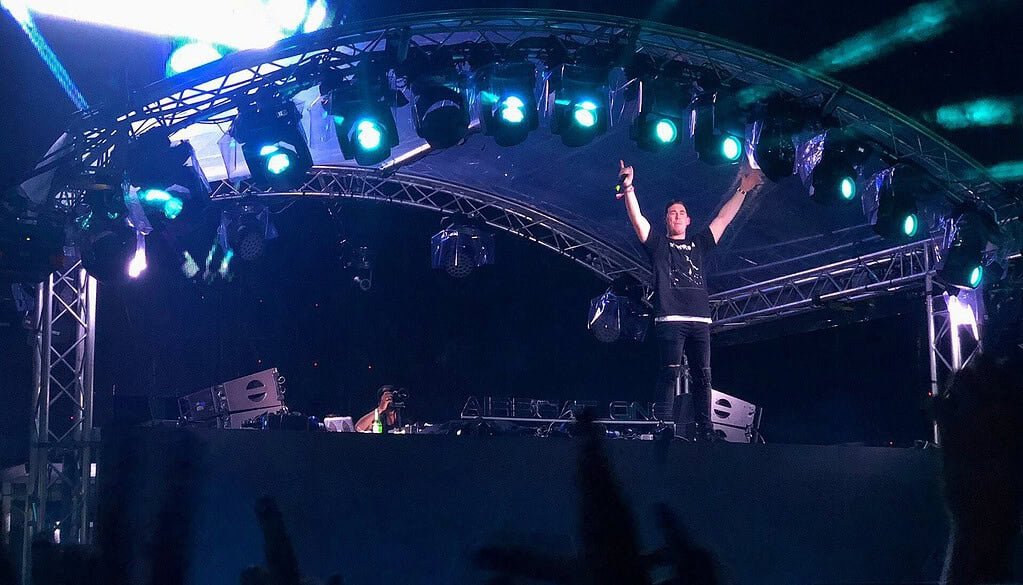
Cover photo: Hardwell, founder of Revealed Recordings, at Airbeat One 2018. Photo by Q1q2q3qwertz, Wikimedia Commons, CC BY-SA 4.0.