Daft Punk Faces: Who Is Really Behind the Helmets
Discover the iconic faces behind Daft Punk in a detailed guide. Learn about their split, current status, outfits, and electronic music legacy.


Updated: September 2026
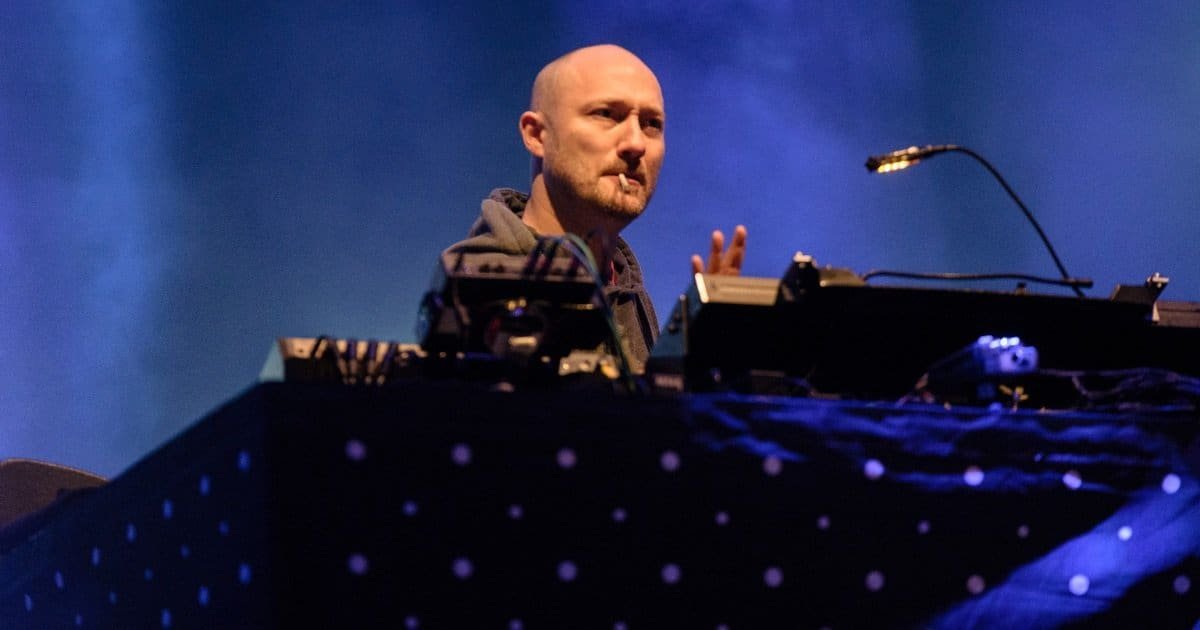
Daft Punk were two French musicians: Thomas Bangalter, who wore the silver helmet, and Guy-Manuel de Homem-Christo, who wore the gold one. Their faces were never really a secret. Both have been photographed unmasked for decades, and since the duo split in 2021 Bangalter has given interviews and played live shows with his face uncovered.
Who Are the Faces Behind the Daft Punk Helmets?
There are only two of them, and there have only ever been two. Daft Punk was not a band with a rotating line up, a session drummer or a hidden third member. Everything the project released between 1993 and 2021 came from the same pair of Parisians.
| Member | Helmet | Born | Age in 2026 |
| Thomas Bangalter | Silver, chrome finish | 3 January 1975, Paris | 51 |
| Guy-Manuel de Homem-Christo | Gold, with a red military jacket in the Random Access Memories era | 8 February 1974, Neuilly-sur-Seine | 52 |
The two met in 1987 at a secondary school in Paris. They played guitar and bass in an indie rock band called Darlin’ before a dismissive review that used the phrase “daft punky thrash” gave them the name they kept. By 1993 the guitars were gone and the drum machines were in. Guy-Manuel is the older of the two by just under a year, which answers one of the most common questions about the pair.
Have Daft Punk Ever Shown Their Faces in Public?
Yes, many times. The helmets were a stage costume, not a witness protection programme. What Daft Punk refused to do was put their faces on album covers, in press photographs and in television interviews. Away from that promotional machine they moved around Paris without disguise, and photographers have caught them for thirty years.
A short timeline of the moments where the masks came off in public:
- 1996 to 1999. Early press appearances are done with their backs to the camera, in shadow, or with the pair simply out of shot. Faces exist in circulation from this era but never in an official band portrait.
- 2006. During the Electroma press run they sit for a televised interview with cloth bags over their heads, a joke at the expense of the anonymity question.
- April 2023. Bangalter releases the orchestral score Mythologies under his own name and allows himself to be photographed without a mask for the accompanying interviews. It is the first time he fronts a record as a visible person.
- January 2024. Bangalter appears in public at the Angouleme International Comics Festival, talking about manga, Leiji Matsumoto and the link between comic book characters and the robot personas.
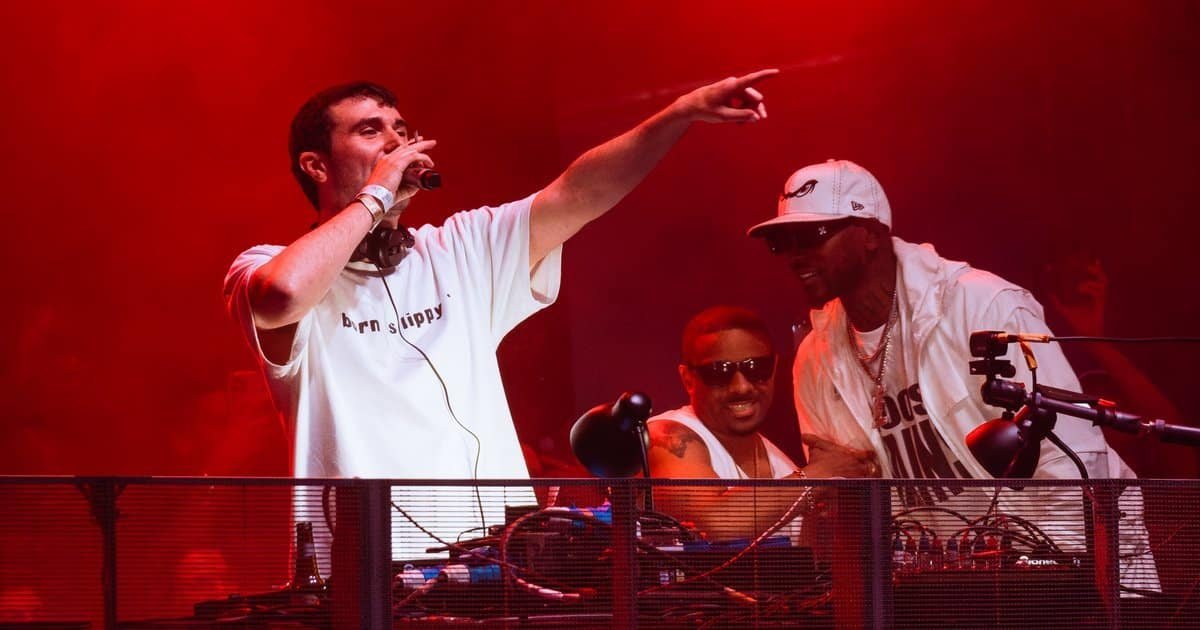
- October 2025. Bangalter plays a surprise back to back DJ set at the Centre Pompidou in Paris, his first DJ set in sixteen years, alongside Fred again.., Erol Alkan and Busy P. No helmet.
- February 2026. He returns for a near two hour back to back with Fred again.. at Alexandra Palace in London, again with his face uncovered.
Why is it so hard to find a real photo of them?
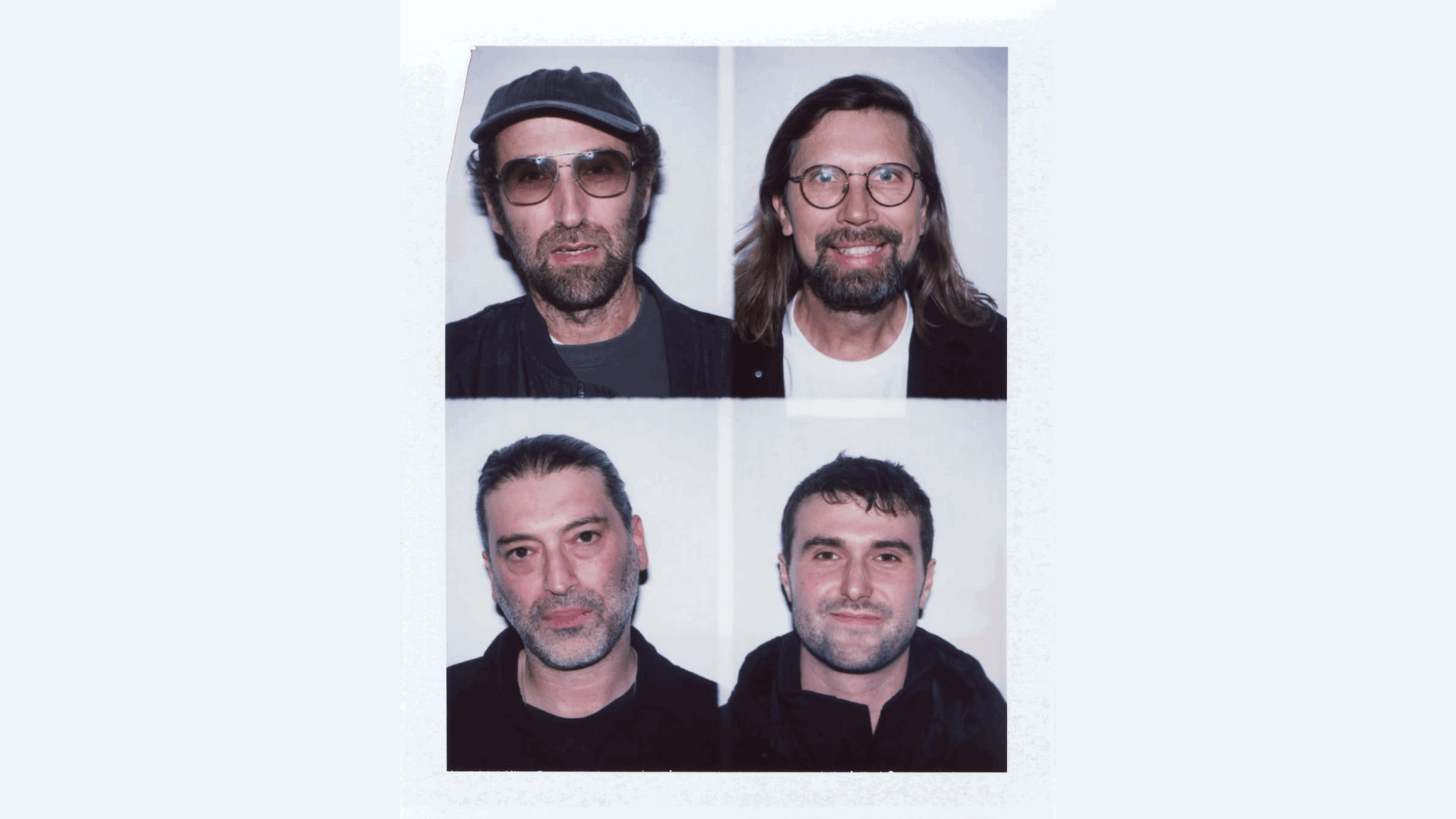
Because the supply of genuine unmasked pictures is small and the demand is enormous. Two decades of fan forums, image boards and now generated fakes have filled the results for “daft punk face reveal” with portraits that are either the wrong people, heavily retouched, or invented outright. A useful filter: if an image shows the pair posed together, lit like a studio portrait and captioned as a reveal, it is almost certainly not them. The authentic material is nearly always candid, from a festival aisle, an airport, a film set or a red carpet where one of them turned up as a guest rather than as the act.
The second filter is date. Anything presented as a 2025 or 2026 unmasking of the duo is wrong by definition, because the duo has not existed since February 2021. What did happen in those years is that one member, Bangalter, stopped hiding at all. His surprise return to the decks alongside Fred again.. was filmed by a room full of phones, which is about as verified as a face gets.
Guy-Manuel has stayed further back. He has not fronted a record under his own name and gives almost no interviews, though his name appears in the credits of other people’s albums. If you are searching for a formal, staged unmasking with a press release attached, it never happened and probably never will. The reveal has been gradual, and it happened mostly after the group ended.
Why Did Daft Punk Wear Helmets?
The duo gave two consistent explanations over the years. The first was practical: separating the work from the person let them keep an ordinary life, walk to a cafe, and avoid the attention that follows a face. The second was artistic. A robot has no age, no nationality and no expression, so the audience projects onto it instead of onto two men from Paris.
The origin story they told is lighter than either. In the official version, a sampler exploded in their studio on 9 September 1999, and they woke up as robots. It is a myth, but it is a useful one: it turned a costume decision into a narrative that carried three albums, a feature film and a stadium tour.
There was a commercial logic too, even if they never framed it that way. A mask is transferable. It can be worn by a stand in for a photo shoot, reproduced as merchandise, drawn by a fan in thirty seconds and recognised in silhouette from the back of a stadium. Very few musicians own a shape that strong. The helmets turned a duo who barely gave interviews into one of the most recognisable acts in electronic dance music, which is a neat trick for two people who did not want to be looked at.
What Are the Daft Punk Robots and Characters Called?
This is where a lot of searches go wrong. The two robots have no official names. Daft Punk never christened them, so fans identify them by helmet colour: the gold robot is Guy-Manuel and the silver robot is Thomas Bangalter. Any list of “robot names” you find is fan invention.
The named characters people are usually thinking of come from Interstella 5555: The 5tory of the 5ecret 5tar 5ystem, the 2003 animated film built around the Discovery album, directed by Kazuhisa Takenouchi and supervised by Leiji Matsumoto. The blue skinned alien band in that film are:
- Stella, the bassist
- Arpegius, the guitarist
- Octave, the keyboard player
- Baryl, the drummer
- Shep, the pilot who follows them to Earth and rescues them
Those five are fictional. The helmets in every photograph of the real group contain the same two people.
What Are Thomas Bangalter and Guy-Manuel Doing Now?
Both are working, and in 2026 both released music, in wildly different directions.
Thomas Bangalter: orchestral scores and a return to the DJ booth
Since the split, Bangalter has largely abandoned club music. Mythologies (2023) was a ballet score for orchestra. Chiroptera and the soundtrack to Quentin Dupieux’s film Daaaaaali! followed in 2024. On 5 June 2026 he released Mirage: Ballet For 16 Dancers through Warner Classics, eight pieces composed and performed entirely by him for a production by choreographer Damien Jalet and artist Kohei Nawa that premiered at the Grand Theatre de Geneve in May 2025. He has cited the Greek French composer Iannis Xenakis as a reference point, which tells you how far this sits from “One More Time”.
The other half of his 2026 was less expected. After the Pompidou set in October 2025, Bangalter joined Fred again.. again on 27 February 2026 at Alexandra Palace in London for the closing night of the USB002 run. Fred again.. later published the full recording, nearly two hours of it, on his own channel. The set closes with “One More Time”.
Guy-Manuel de Homem-Christo: production credits, no solo record yet
Guy-Manuel has taken the producer’s route. In November 2025 he co-wrote “Reliquia” for Rosalia‘s album Lux. In 2026 he co-wrote and produced “RHYNO” for Travis Scott, one of the first singles from Grand Theft Auto VI: The Album, the 34 track companion record due on 19 November 2026. Our full breakdown of that tracklist is in the GTA 6 soundtrack guide.
A solo album has been rumoured since a French label executive said on radio in late 2025 that “Guy-Man fait son album”. Nothing has been announced, no title, no date, no label statement. Treat it as a rumour until it is not.
When and Why Did Daft Punk Break Up?
On 22 February 2021 the duo posted an eight minute video called Epilogue, cut from their 2006 film Electroma, in which one robot detonates the other in a desert. The dates 1993 to 2021 appear on screen. There was no press release, no interview and no reason given, then or since. Their publicist confirmed the split and said nothing more. We covered the announcement as it happened in Daft Punk Broke Up.
What Albums Did Daft Punk Release?
Four studio albums in twenty eight years, plus the Tron: Legacy score in 2010 and two live records. If you want the songs rather than the records, start with the top 10 Daft Punk songs of all time.
Homework (1997)
The debut, built on raw filtered loops. “Around the World” and “Da Funk” pushed French house onto radio in countries that had never heard of it.
Discovery (2001)
The turn towards melody, vocoders and disco samples. “One More Time” and “Harder, Better, Faster, Stronger” came from here, and so did the first full robot helmets.
Human After All (2005)
Recorded fast and deliberately repetitive. It divided reviewers at the time, then supplied much of the material for the 2006 and 2007 live shows that changed what an electronic concert looked like.
Random Access Memories (2013)
Live musicians, analogue studios and guests including Pharrell Williams, Nile Rodgers, Giorgio Moroder and Julian Casablancas. It won Album of the Year at the Grammys and gave them “Get Lucky”, the last hit they released together.
How Did Daft Punk Change House and Techno?
Homework made the filter sweep a standard tool and gave French house its template. Discovery pulled vocoded vocals and disco chords into a scene that had been mostly instrumental, which is a line you can draw straight to a large part of what gets played on main stages today. Their pyramid stage at Coachella in 2006 reset the production standard for live electronic shows, and the influence spreads well beyond techno into pop and hip hop production.
The Tron: Legacy score in 2010 did something different again, proving that a club duo could write for orchestra without losing their identity. Bangalter’s post 2021 work is the long tail of that experiment.
How Did the Daft Punk Helmets Change Over Time?
The look moved in step with the music. In the Homework years the masks were homemade and inconsistent, closer to Halloween than to industrial design. For Discovery in 2001 they commissioned full robotic helmets from Tony Gardner and Alterian, Inc., with LED displays behind the visors. The Human After All and Electroma period stripped the finish back to bare metal to match the album’s cold repetition. By Random Access Memories the helmets were high gloss gold and chrome, worn with tailoring, sequins and leather that matched the record’s disco nostalgia.
What Did Daft Punk Actually Win?
Eight Grammy Awards. Five of them arrived in a single night in January 2014: Album of the Year and Best Dance/Electronic Album for Random Access Memories, Record of the Year and Best Pop Duo/Group Performance for “Get Lucky”, and Best Engineered Album, Non-Classical. Two came earlier, in 2009, when Alive 2007 took Best Electronic/Dance Album and its version of “Harder, Better, Faster, Stronger” took Best Dance Recording. The eighth came in 2018 for their work on The Weeknd‘s Starboy. They collected the 2014 awards in their helmets and let Pharrell Williams and Nile Rodgers do the talking, which remains the single best illustration of how the whole arrangement worked.
The influence spread past the record shelf. The helmets were photographed for fashion campaigns, the pyramid from the 2006 and 2007 tour was copied by a generation of production designers, and Electroma, the film they directed in 2006, still screens at festivals despite containing not a single track from their own catalogue. Their sampling approach, taking a bar of a forgotten disco record and filtering it until it became a hook, became a standard technique rather than a signature.
Frequently Asked Questions About Daft Punk’s Faces
What do Daft Punk look like without their helmets?
They look like two ordinary French men in their fifties, which is exactly the point. There is no official unmasked band portrait, because Daft Punk never released one. What exists is press and festival footage from before, during and after the group, plus the interviews Thomas Bangalter gave with his face uncovered from 2023 onward and the DJ sets he played without a helmet in 2025 and 2026.
Who is under the gold Daft Punk helmet?
Guy-Manuel de Homem-Christo wears the gold helmet. Thomas Bangalter wears the silver one. This stayed consistent from the Discovery era in 2001 until the split in 2021.
How old are the Daft Punk members?
Guy-Manuel de Homem-Christo was born on 8 February 1974 and is 52 in 2026. Thomas Bangalter was born on 3 January 1975 and is 51. They met at school in Paris in 1987, when both were teenagers.
Are Daft Punk brothers or related?
No. They are not related. They were schoolfriends who met at a secondary school in Paris in 1987 and started making music together as teenagers.
Will Daft Punk ever reunite?
Nothing has been announced. Neither member has ruled out working together again, but neither has suggested it either. Bangalter is writing ballet scores and Guy-Manuel is producing for other artists, and as of September 2026 there is no reunion date, tour or record in the public record.
Also Read: Best DJ Duos 2026: EDM, House and Techno Pairs Ranked.