The Crisis of Boiler Room: Is This the End?
The crisis of Boiler Room reveals the cost of corporate ownership in underground electronic music culture.

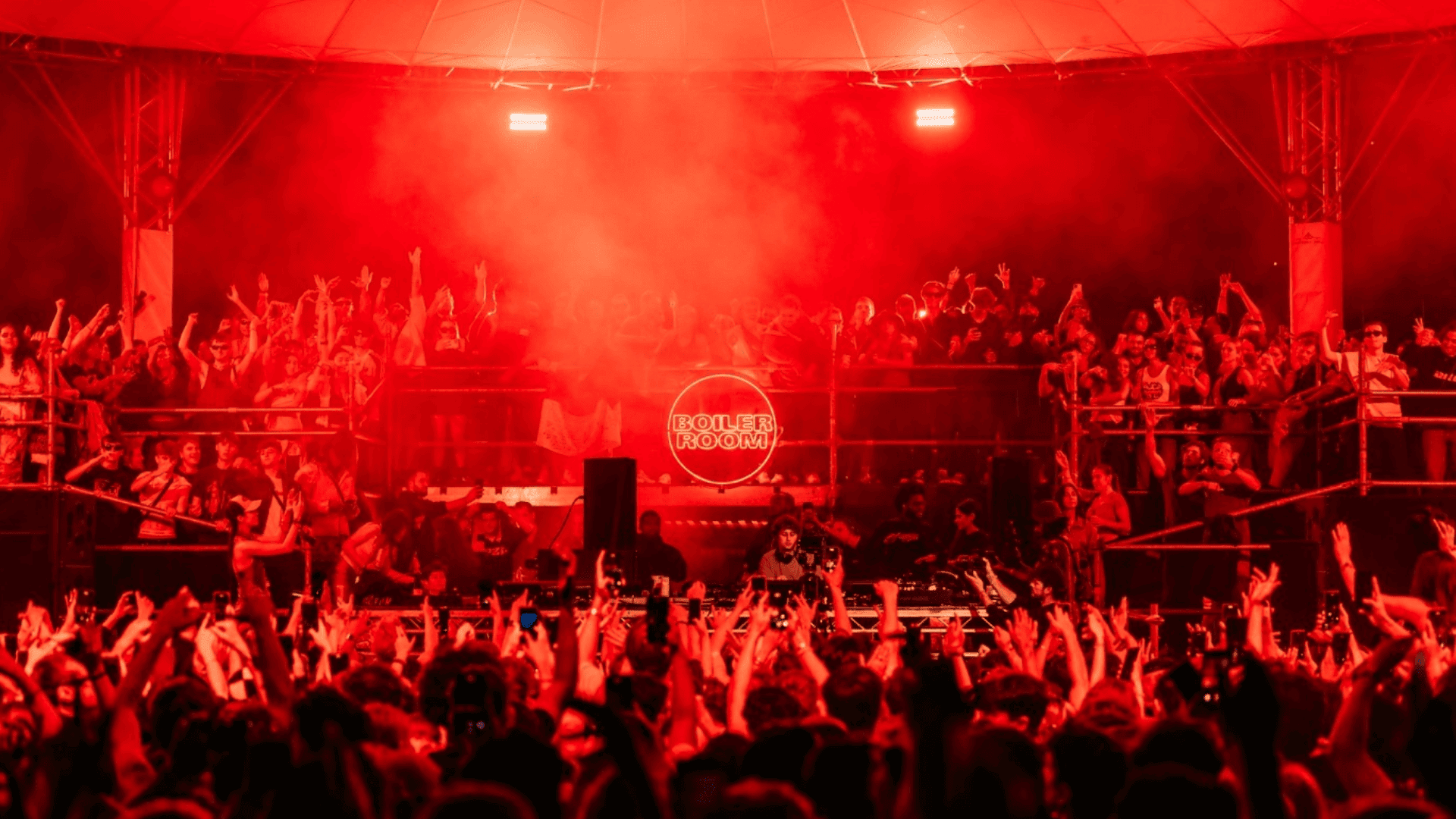
Boiler Room was never meant to be quiet, but its loudest moment may now be its most uncomfortable.
For more than a decade, Boiler Room didn’t just broadcast club culture — it defined it. From sweat-soaked basements in London to rooftops in Nairobi, abandoned warehouses in Berlin to intimate rooms in São Paulo, the platform became a living archive of global underground music. No stages. No crowds facing the DJ. Just people, sound, and a camera placed exactly where it mattered.
Now, that identity is under its most serious threat yet.
In late November 2025, Boiler Room quietly confirmed what many inside the industry had been bracing for: “substantial” layoffs, affecting a significant portion of its workforce as the company prepares for 2026. Official language pointed to “changes to the structure of the business.” Internally, the impact felt far more human — teams dismantled, long-standing contributors let go, and a sense that something foundational was slipping away.
But the layoffs are only the most visible symptom of a deeper crisis.
View this post on Instagram
From Cultural Institution to Corporate Asset
Boiler Room was born in 2010 as a passion project — a raw livestream from a small London office that privileged community over spectacle. Its rise was organic, fuelled by trust. Artists believed in it. Scenes welcomed it. Audiences felt it belonged to them.
That trust has been steadily eroding since January 2025, when Boiler Room was acquired by Superstruct Entertainment, itself owned by private equity giant KKR. Overnight, a platform synonymous with grassroots credibility became entangled in the logic of global capital.
What followed was inevitable.
Boycotts erupted across cities that once formed the backbone of Boiler Room’s cultural authority — London, Lisbon, Kuala Lumpur, Sydney, Melbourne. Artists pulled out. Open letters circulated. Protestors disrupted events. The message was consistent and loud: ownership matters, and underground culture cannot be separated from the structures that fund it.
Boiler Room, once a neutral lens, suddenly found itself framed as a symbol of everything club culture has historically resisted.
View this post on Instagram
The Human Cost Behind the Headlines
The layoffs cut through this tension in the most personal way possible.
Behind every “role at risk” was a curator, producer, technician, writer — people who helped build Boiler Room’s reputation from the inside. Many had deep ties to the very scenes now turning away from the brand. To critics, the cuts confirmed fears of a pivot toward efficiency over ethos. To supporters, they exposed the cruel paradox of boycotts: that resistance often harms workers long before it touches ownership.
Inside the organisation, morale has reportedly fractured. For a platform built on collective energy, community, and mutual belief, the sense of disconnection is profound.
This is no longer just a business restructure. It’s an identity crisis.
Authenticity Under Pressure
At its core, Boiler Room’s dilemma is philosophical.
Can a platform rooted in underground values survive inside a multi-billion-dollar investment ecosystem? Can editorial independence truly exist when financial imperatives loom? And perhaps most critically: what does authenticity mean when culture becomes an asset class?
Boiler Room has insisted that its output remains uninfluenced by investors. Yet perception, in culture, often outweighs intention. For many artists and fans, the brand now exists in contradiction — broadcasting radical, community-driven music while sitting within a corporate framework associated with power, profit, and political controversy.
That contradiction has become impossible to ignore.
View this post on Instagram
A Community Divided
The response from the global dance music community has been anything but unified.
Some argue that abandoning Boiler Room only accelerates its corporate absorption, stripping remaining staff of jobs and influence. Others maintain that continued participation normalises a structure they fundamentally oppose. Between those positions lies a growing silence — artists unsure whether performing is complicity, and audiences unsure whether watching is endorsement.
What was once a shared cultural space now feels contested ground.
View this post on Instagram
What Comes Next?
Boiler Room stands at a crossroads — and the path forward is far from clear.
One future sees retrenchment: fewer broadcasts, smaller teams, a quieter presence that attempts to rebuild trust scene by scene. Another points toward full commercial alignment — leaning into large-scale events, branded experiences, and a safer, more predictable model. A third imagines an uneasy hybrid: vocal political positioning paired with unavoidable corporate realities.
And then there is the most unlikely possibility of all — separation. A return to independence. A reset. A second act rooted once again in community ownership rather than financial leverage.
Whether that future is possible remains unknown.
The End of an Era — Or a Reckoning?
Boiler Room’s crisis is bigger than one company. It reflects a broader moment in electronic music, where underground culture is grappling with its place inside global capitalism. The questions raised here won’t disappear with a restructuring plan or a new strategy deck.
They linger on dancefloors, in artist group chats, behind DJ booths, and across livestream comment sections.
Boiler Room once showed the world how scenes sound when they are left alone to breathe. Its greatest challenge now is proving that spirit can survive when the stakes are higher, the structures heavier, and the room no longer belongs solely to the people inside it.
Whether this moment marks the beginning of the end — or the beginning of something braver — will define not just Boiler Room’s future, but a chapter of club culture itself.